

Featured Speakers of The 2026 GHLC at JHU

Thomas Quinn, MD, MSc
Founding Director of the Johns Hopkins Center for Global Health; NIH Distinguished Investigator; Associate Director of International Research at the National Institute of Allergy and Infectious Diseases (NIAID); Chief of the International HIV/STD Section in the NIAID Laboratory of Immunoregulation; Professor of Medicine and Pathology in the Johns Hopkins School of Medicine; Professor of Epidemiology, International Health, Molecular Microbiology and Immunology in The Johns Hopkins School of Public Health; Professor of Nursing in The Johns Hopkins School of Nursing
Dr. Thomas Quinn is professor of medicine and pathology in the Johns Hopkins School of Medicine and professor of international health, epidemiology, and molecular microbiology and immunology in The Johns Hopkins School of Public Health, and professor of nursing in the Johns Hopkins School of Nursing. In 2006 he was appointed founding Director of the Johns Hopkins University Center for Global Health. He serves as advisor/consultant on HIV and STDs to the World Health Organization, Office of the Global AIDS Coordinator (PEPFAR), UNAIDS, and the FDA.
He serves as Associate Director for International Research at the National Institute of Allergy and Infectious Diseases. He is a member of the Institute of Medicine of the National Academy of Sciences, and is a fellow of the American Association for the Advancement of Science. He is a fellow of the Infectious Diseases Society of America and a member of the American Association of Physicians. He is an author of over 900 publications on HIV, STDs, and infectious diseases, and serves on multiple editorial boards.
Among his professional activities, Dr. Quinn is an alternate member of the Technical Panel of the Global Fund to Fight AIDS, Malaria, and Tuberculosis and has been on Advisor/Consultant on HIV and STDs to the World Health Organization, UNAIDS, and the U.S. Food and Drug Administration. In October 2004 he received membership in the Institute of Medicine.

Atul Gawande, MD, MPH
John and Cyndy Fish Chair in Surgery at Brigham and Women's Hospital; Samuel O. Thier Professor of the Practice of Surgery at Harvard Medical School; Former Assistant Administrator for Global Health at USAID
Atul Gawande, MD, MPH, is a renowned surgeon, author, and public health innovator. He holds the John and Cyndy Fish Chair in Surgery at Brigham and Women’s Hospital and is the Samuel O. Thier Professor of the Practice of Surgery at Harvard Medical School. He was Assistant Administrator for Global Health at USAID from January 2022 to January 2025. Prior to that, he co-founded and chaired Ariadne Labs, a joint center for health systems innovation where he is now Distinguished Professor in Residence, and Lifebox, a nonprofit organization making surgery safer globally. From 2018-2020, he was CEO of Haven, the Amazon, Berkshire Hathaway, and JPMorgan Chase healthcare venture.
Dr. Gawande is also a longtime writer for The New Yorker magazine and has written four New York Times best-selling books: Complications, Better, The Checklist Manifesto, and Being Mortal. He is a member of the National Academy of Medicine and has won two National Magazine Awards, AcademyHealth’s Impact Award for highest research impact on healthcare, and a MacArthur Fellowship. And he is executive producer for three documentary films: the Emmy-nominated adaptation Being Mortal (2016), the Oscar-nominated film To Kill A Tiger (2024), and The New Yorker film Rovina’s Choice (2025).

Samuel Poore, MD, PhD
Chair of the Division of Plastic and Reconstructive Surgery at the University of Wisconsin–Madison; Distinguished Endowed Chair of Global Education in Plastic and Reconstructive Surgery; Founder of WiscVision
Dr. Samuel O. Poore is Chair of the Division of Plastic and Reconstructive Surgery at the University of Wisconsin–Madison and holds the Distinguished Endowed Chair of Global Education in Plastic and Reconstructive Surgery. A reconstructive microsurgeon and global surgery leader, Dr. Poore has dedicated much of his career to expanding access to complex reconstructive care through sustainable surgical education and international partnership. He has established microsurgical training programs and educational collaborations across Africa, Asia, Latin America, and Eastern Europe, working alongside local surgeons to build long-term capacity in regions where access to reconstructive surgery remains limited.
Dr. Poore is the founder of WiscVision, an innovative initiative that leverages low-cost, high-fidelity 3D-printed surgical microscopes, simulators, and open-access educational resources to democratize microsurgical education worldwide. Through WiscVision, his team is developing scalable models of surgical training designed to expand access to microsurgical education in low- and middle-income countries and foster self-sustaining local expertise.
In addition to leading international educational initiatives in countries including Vietnam, Rwanda, Burundi, South Africa, Egypt, Nicaragua, Panama, and the Dominican Republic, Dr. Poore recently helped establish a training partnership for Ukrainian war surgeons, bringing frontline surgeons to Wisconsin for advanced reconstructive and microsurgical training. He has authored more than 150 peer-reviewed publications, edited the book Extremity Replantation: A Comprehensive Clinical Guide and his lab, as either PI or Co-I, has earned over $15 million dollars in federal funding through DARPA, NIH, DOD and the Veterans Administration on projects ranging from peripheral nerve regeneration, neural engineering, prosthetic development, and vascular engineering. Dr. Poore continues to advocate for innovation, collaboration, and equity in global surgical care and research.

Deanna Saylor, MD, MHS
Associate Professor of Neurology at the University of North Carolina School of Medicine; Former Director of Zambia's first neurology postgraduate training program; Former Leader of Zambia's first inpatient neurology service
Dr. Deanna Saylor is an Associate Professor of Neurology at the University of North Carolina School of Medicine. Dr. Saylor completed her undergraduate studies in chemistry and molecular genetics at The Ohio State University, graduated from medical school from the Johns Hopkins University School of Medicine, and obtained her Masters in Clinical Epidemiology from the Johns Hopkins University Bloomberg School of Public Health in Baltimore, Maryland. After completing an internship in internal medicine at Johns Hopkins Bayview Medical Center, she then completed neurology residency and neuro-infectious diseases fellowship training at the Johns Hopkins Hospital. Her clinical and research interests include neurological complications of HIV, global health and neurology, and improving the diagnosis and management of neurological conditions in resource-limited settings using implementation science with a particular focus on stroke care. Much of her research is based in sub-Saharan Africa, including projects in Kenya, Uganda and Zambia.
Most recently, Dr. Saylor lived and worked full-time in Zambia from 2018-2026 as Director of the first and only neurology post-graduate training program in the country. She also led Zambia’s first inpatient neurology service, based at the University Teaching Hospital, during that time and helped launch Zambia’s first teleneurology service and first stroke unit, while building an ongoing clinical research program focused on stroke, multiple sclerosis, and improving systems of neurological care in Zambia.
Dr. Saylor is also a recipient of the American Academy of Neurology’s Ted Burns Humanism Award, Mridha Spirit of Neurology Award, Neuro-Infectious Disease Award, and A.B. Baker Teacher Recognition Award; the American Neurological Association’s Distinguished Neurology Teacher Award and Derek Denny Brown Award in Clinical Research; the Johns Hopkins Alumni Association Global Achievement Award; and the Society for Equity Neuroscience (SEQUINS) Griffith Outstanding Mentor Award.

Chris Beyrer, MD, MPH
Director of the Duke Global Health Institute; Gary Hock Distinguished Professor of Global Health at Duke University; Professor of Medicine at Duke University
Chris Beyrer, MD, MPH, an internationally recognized epidemiologist who has worked on the front lines of HIV/AIDS and COVID-19 treatment and research, became director of the Duke Global Health Institute in August 2022. In 2024, Beyrer was named the Gary Hock Distinguished Professor of Global Health. He currently serves as Professor of Medicine at Duke, Associate Director of the Duke Center for AIDS Research, and as a faculty member of the Duke Human Vaccine Institute.
Beyrer has led collaborative research on HIV epidemiology, prevention and treatment in Southeast Asia, Sub-Saharan Africa, and Eastern Europe and Central Asia for more than 30 years. He is past president of the International AIDS Society, the world’s largest body of HIV professionals, and currently serves as an advisor to the U.S. President’s Emergency Plan for AIDS Relief (PEPFAR), the HIV Vaccine Trials Network, the World Health Organization, and Physicians for Human Rights. The author of over 440 scientific papers, he was named in 2022 to the annual list of the world’s most cited scientists.
Before coming to Duke, Beyrer was the inaugural Desmond M. Tutu Professor of Public Health and Human Rights. He received his medical degree from SUNY Downstate Health Sciences University and holds a Master of Public Health from Johns Hopkins Bloomberg School of Public Health. He was elected to the National Academy of Medicine in 2014 and serves on the Academy’s Board for Global Health and on the Committee for Human Rights.

Youseph Yazdi, MBA, PhD
Assistant Professor of Biomedical Engineering at Johns Hopkins University; Executive Director of the Center for Bioengineering Innovation and Design (CBID); Program Director of the Wallace H. Coulter Translational Research Partnership Program
Dr. Youseph Yazdi is an assistant professor of biomedical engineering at the Whiting School of Engineering and the Johns Hopkins School of Medicine. He also serves as executive director of the Center for Bioengineering Innovation and Design and program director of the Wallace H. Coulter Translational Research Partnership Program.
Yazdi is an American Institute for Medical and Biological Engineering Fellow and a recipient of the Johnson & Johnson Standards of Leadership Award. Prior to his arrival at Johns Hopkins, Yazdi was a corporate director in Johnson & Johnson’s Corporate Office of Science and Technology, where he was responsible for the creation and management of external and internal partnerships that funded and guided early-stage health care innovation.
He holds a BS in electrical and computer engineering from Rice University, as well as an MS in electrical engineering and a PhD in biomedical engineering from the University of Texas at Austin. He also earned an MBA in entrepreneurial management from the University of Pennsylvania’s Wharton School of Business.
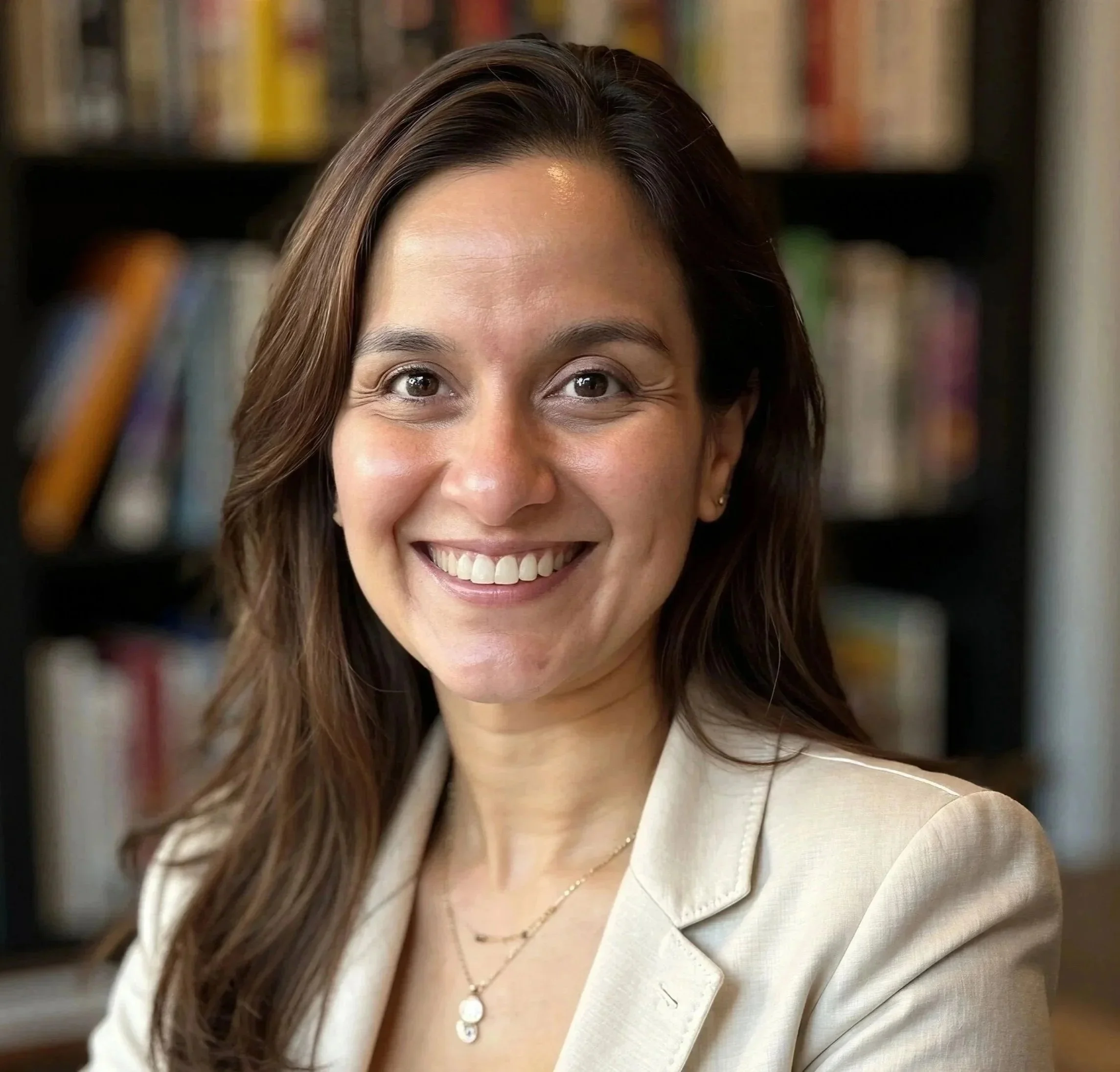
Smisha Agarwal, PhD, MPH, MBA, BDS
Director of the Center for Global Digital Health Innovation; Associate Professor in the Department of International Health at the Johns Hopkins Bloomberg School of Public Health; Editor-in-Chief of the Oxford Open Digital Health Journal
Dr. Smisha Agarwal, PhD, MPH, MBA, BDS is the Director of the Center for Global Digital Health Innovation and Associate Professor in the Department of International Health at the Johns Hopkins Bloomberg School of Public Health. She brings expertise in advancing primary health care through strengthening community health systems and leveraging innovative technological solutions including digital tools and integrated diagnostics. Over the last two decades, her research has been leveraged by normative agencies like WHO to develop guidelines on national digital transformation, donors to guide investments in digital health and AI, and governments to develop their national digital health strategies. She is the Editor-in-Chief of the Oxford Open Digital Health Journal.
Special Panel: Global Health Policy, Human Rights, & LGBTQ+ Health


Michelle Lu
Medical Student at National Taiwan University; Vice President of the Harvard Undergraduates in Asia Program (HUAP) Taipei
Wei-Hsuan (Michelle) Lu is a second-year medical student at National Taiwan University focused on improving healthcare access for marginalized communities. Her current research examines how healthcare policies impact the everyday realities of migrant workers in Taiwan, specifically looking at barriers to sexual health and preventative care.
In addition to her research, Michelle serves as Vice President of the Harvard Undergraduates in Asia Program (HUAP) Taipei, reflecting her commitment to international collaboration and global health advocacy.
Patrick Tang
Incoming Doctoral Student in Global Health Policy at Johns Hopkins University
Patrick Tang is an incoming doctoral student in Global Health Policy at Johns Hopkins. His interdisciplinary research spans health policy, LGBTQ+ rights, and international law, with work ranging from the legal challenges of marriage equality in Hong Kong to sexual health barriers faced by international migrant workers.
He currently leads a rights-based health policy study examining governance gaps in the implementation of sexual health services for migrant workers in Taiwan, supported by National Taiwan University’s Population Health & Welfare Research Center and Harvard Global Health Institute.


Sean Du
Secretary-General of the Taiwan Tongzhi (LGBTQ+) Hotline Association
Sean Sih-Cheng Du (he/him) is the Secretary-General of the Taiwan Tongzhi (LGBTQ+) Hotline Association. He joined Hotline as a volunteer in 2002 and has been since actively involved in the work on LGBTI+ and PLWHIV's rights. He became Hotline's Director of Policy Advocacy in 2011 and the Secretary-General in 2021. His work includes social education, LGBTQ+ inclusive workplace, gay men's sexual health, LGBTQ+-friendly healthcare, and international affairs.
Po-Han Lee, PhD, LL.M., LL.B
Associate Professor in the Global Health Program and Institute of Health Policy and Management at National Taiwan University
Po-Han (Peter) Lee is an Associate Professor in the Global Health Program and the Institute of Health Policy and Management at National Taiwan University. Trained in sociology and international law, his work examines global health governance, human rights, gender and sexuality, disability and crip studies, and social movements. He is also actively involved in public scholarship, civil society advocacy, and human rights treaty review processes in Taiwan.